We are dedicated to applied research for the health of humans, animals, and the environment. We specialize in the development of new diagnostic detection methods and new analytical methods. We also develop new therapies for the health of animals (e.g., horses and dogs).
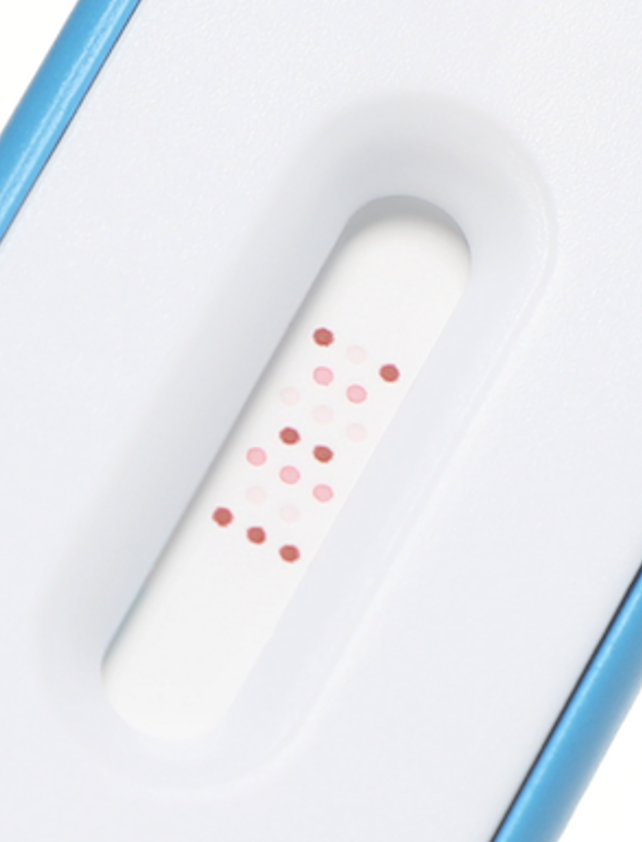
One of our core competencies is the high-precision dispensing of biomolecules—such as peptides, proteins, nucleic acids, and sugars—onto a wide variety of surfaces.
This allows us, for example, to develop multiparameter assays, such as a rapid test with 18 parameters for the rapid detection of allergies.
We combine our expertise in the fields of cell biology, in-vitro diagnostics, biotechnology and optical analysis internally with applications from our veterinary clinic and externally with the needs of large and small companies. Our department with the laboratory for food testing also creates the interface for healthy food.
As a business-oriented research institution within the Zuse Association, we are the link between science and industry. Our application-oriented research and development of processes and products enables rapid implementation on the market.
You can find an overview of current investments, research funding, and funding for consulting services provided by the Free State of Thuringia at the bottom of this page.
News from our research
Our research activities at the fzmb
Research Funding
Quantitative Detection of Rare Cells
The goal of the project is to develop a rapid method for the optical detection and isolation of rare cells, particularly circulating tumor cells (CTCs), from large sample volumes. The CTCs are labeled and isolated using a new technology. The method is designed to be easily implemented in existing laboratory settings and highly scalable.
Funded by the Free State of Thuringia with funds from the European Regional Development Fund (Funding Code: Thuringia Individual R&D (FEE)). Measure 1.1.1.1.5; Project No.: 2025FEE0024). Duration: December 15, 2025 – December 31, 2027

OneHealth: Detection of Shiga toxin-producing, antibiotic-resistant E. coli bacteria
The goal of the project is to develop a two-step, OneHealth-based detection system for shigatoxin-producing, antibiotic-resistant Escherichia coli (STEC/EHEC) bacteria. These pathogens can cause severe and, in some cases, life-threatening illness in humans. This infectious disease is a zoonosis with rising incidence rates. To detect transmission from animals to humans at an early stage, detection in the animal reservoir will involve toxin detection followed by molecular characterization of resistance and virulence genes as part of a diagnostic workflow.
Funded by the Free State of Thuringia with funds from the European Regional Development Fund (Funding Code: Thuringia R&D Individual (FEE)). Measure 1.1.1.1.5; Project No.: 2025FEE0025). Duration: January 1, 2026 – December 31, 2028
Multi-Interact Research Group
Biointeraction technology based on 2D sensor materials for time-resolved multiparameter analysis in the pharmaceutical and diagnostics sector
The determination of biomarkers is an important factor in diagnostics and drug development. These indicators make it possible to recognize and classify pathological processes and to determine and monitor the course of therapy. Due to the diversity of these biomolecules, multiplexing technologies are very important for effective development processes in health research. In this context, a precise, kinetic determination of the interaction processes between the molecule groups should be carried out. This means that not only a high degree of parallelization of measurements, but also the simultaneous recording of the binding kinetics of the substances per measurement point provide important insights into the biological interaction. The Multi-Interact project addresses this research need and demonstrates the feasibility of the planned universal biointeraction technology using examples of various biomarkers. To measure the biological interactions, a biosensor based on graphene field-effect transistors functionalized with biomolecules via a carbon nanomembrane is being researched. These membranes are single-layer atomic layers, so-called 2D sensor materials, which enable very high sensory sensitivity and application-specific miniaturization.
Term: 01.01.2025 – 31.12.2027
Supported by the Free State of Thuringia with funds from the European Social Fund Plus (funding code: 2024 FGR 0067).


Current Investments in Research
Digital research infrastructure for genomic analysis
As part of the Free State of Thuringia’s funding program to promote research, technology, and innovation (FTI), we are continuing to invest in the digitization of our research. The goal is to establish a high-performance, scalable digital research infrastructure for the processing, analysis, and long-term storage of genomic data, particularly in the fields of gut health and molecular diagnostics. This will, among other things, make it possible to analyze complex datasets from next-generation short- and long-read sequencing even faster and to further improve the quality of the results by integrating various bioinformatics tools.
Funded by the Free State of Thuringia with support from the European Regional Development Fund (Grant No.: 2026 WID 0003).
System for hyperspectral infection and hygiene control
As part of the funding program of the Free State of Thuringia for the promotion of research, technology and innovation (RTI), fzmb GmbH is planning a future-oriented expansion of its technological portfolio with the implementation of a system for hyperspectral infection and hygiene control. As part of the planned investment project, a novel, integrated system for improving infection and hygiene control will be realized that combines the strengths of hyperspectral imaging, state-of-the-art microarray technology and automated spotting systems. The aim is to develop innovative methods for the early detection of sources of contamination and for outbreak monitoring.
Supported by the Free State of Thuringia with funds from the European Regional Development Fund (funding code: 2025 WIN 0003).
Peptide screening and diagnostics workstation for high-throughput molecular screening and the development of multi-parameter diagnostics
As part of the funding program of the Free State of Thuringia for the promotion of research, technology and innovation (RTI), fzmb GmbH is planning a future-oriented expansion of its technological portfolio with the implementation of a “Peptide Screening and Diagnostics Workstation”. This investment project aims to expand existing capacities in research and development to enable innovative solutions in the field of medical diagnostics and personalized medicine using peptide microarrays to develop advanced diagnostic kits. This should make it possible to quantify disease-relevant biomarkers with high precision and speed. This represents a decisive advance, particularly in the field of early detection and screening of complex diseases. Fast and accurate diagnostics will enable improved patient care through early intervention.
Supported by the Free State of Thuringia with funds from the European Regional Development Fund (funding code: 2024 WIN 0004).
Development of Next Generation Sequencing platform
The COVID-19 pandemic has highlighted the need for a rapid response to the emergence of new, pathogenic pathogens and/or pathogen variants.
At the fzmb, we want to meet this challenge. We are establishing a next generation sequencing platform so that new pathogens (variants) can be identified and characterized more quickly. With the help of this high-throughput method, we can visualize even the smallest genetic changes (such as mutations) in a short time. On this basis, we can subsequently develop improved/adapted diagnostics such as rapid tests (lateral flow assays) for in-house use or ELISAs/microarrarys for laboratory diagnostics.
The project, which is funded by the Free State of Thuringia, is co-financed by the European Union as part of the REACT-EU Fund. The project was realized following a restricted invitation to tender without a call for competition in accordance with ThürVVöA as a sub-threshold delivery service. An NG sequencer from Illumina and the necessary computing hardware from Godyo GmbH were purchased for this purpose. An FPLC (Äkta pure 25 M) from Cytiva was procured for sample preparation and separation. A TapeStation from Agilent) was procured for quality control, a Qubit from Thermo Fisher Scientific for DNA quantification and a PCR cycler (TAdvanced from Analytik Jena). An Arpege170 cryogenic container was purchased from VWR for the storage of samples.
Expansion of the “Highly specific antibodies” technology platform
The emergence of new, pathogenic pathogens and/or pathogen variants requires a rapid response. We are taking up this challenge and investing in the development of specific antibodies for new pathogens. On this basis, we can subsequently develop improved/adapted diagnostics such as rapid tests, for example.
The following equipment was procured for the expansion of the “Highly specific antibodies” technology platform at the fzmb: An electrofusion and electroporation generator (Fisher Scientific GmbH, Schwerte) was procured for the preparation of cells for transfection. A fluorescence microscope (Thunder Imager 3D Assay, Leica Mikrosysteme GmbH, Wetzlar) including components and accessories, a microscope table with accessories (Thorlabs GmbH, Beikirchen) and the corresponding air purification system (KKT Kratochwill GmbH, Mühlhausen) were procured for the selection and characterization of antibody-producing cells. The project, which is funded by the Free State of Thuringia, is co-financed by the European Union as part of the REACT-EU Fund. The project was realized following a restricted invitation to tender without a call for competition in accordance with ThürVVöA as a sub-threshold delivery service.
Grants for Counseling
Innovation voucher (Innoprepare) for the preparation of an R&D project
fzmb GmbH specializes in the development of microarrays for diagnostic applications. The term microarray stands for modern biochemical test systems that enable the parallel analysis of many individual determinations in a small amount of biological sample material. Microarrays consist of a large number of droplets, so-called spots, which are precisely applied to a suitable surface using high-precision microdispensing systems.
The project “Preparation of an R&D cooperation project for the development of an AI-based, adaptive microdispensing system” funded by the Free State of Thuringia is co-financed by ERDF funds from the European Union. As part of a service, the development of a defined task, measures to acquire the necessary cooperation partners and the performance of research and market analyses are being funded.
Project no.: 2025 IIP 0023
Term: 01.10.2025 to 31.08.2026

Innovation voucher (Innoprepare) for the establishment of a new R&D cooperation
The benefits of rapid on-site analysis of possible diseases or infections with the help of rapid tests are now known to everyone. The project “Preparatory activities for the joint project on the development of components for immunochemical lateral flow assays“, funded by the Free State of Thuringia, is co-financed by the European Union as part of the European Regional Development Fund (ERDF). The objectives of the innovation assistance include intensive research into the state of the art for specific components, market analyses and potential R&D partners.
Innovation voucher for the establishment of a new R&D cooperation
Immunotherapies use the body’s own immune system to effectively combat inflammatory processes or cancer, for example. The project “Preparation of an R&D cooperation project for the development of an immunotherapy for special bone diseases” funded by the Free State of Thuringia is co-financed by the European Union. The objectives of innovation assistance include preliminary studies, intensive research into the status of these diseases, existing treatment options, market analyses, etc.

Entrepreneurial support – Subsidy according to consulting guideline
fzmb GmbH is not only a research institute but also operates as a medium-sized company. In order to work even more successfully with partners in foreign markets, we use intensive consulting and process support from independent management consultants. This project is supported by RKW Thüringen GmbH.